
Local SEO Mistakes That Are Costing You Customers

If you run a local business, you need to show up when someone searches things like “plumber near me” or “best coffee shop in Wilmington.” These location-based searches are some of the highest-value opportunities you’ll ever get. People typing them in are usually ready to take action right now.
A “local” business is one that serves customers within a specific geographic area, whether at a physical location or by providing services directly to nearby homes or businesses. Their customer base depends on people in the surrounding community finding them through local or map-based searches.
The trouble is, many local businesses unintentionally hurt their own visibility with simple mistakes. They don’t mean to, but those small slip-ups can add up fast, leading to lost customers, wasted ad spend, and competitors grabbing the leads that should be yours.
This guide breaks down the biggest local SEO mistakes we see all the time, why they’re costing you money, and, most importantly, how to fix them with clear, practical steps you can put to work right away.
Why Local SEO Still Matters
When a consumer searches on Google for a local product or service, many of those queries trigger the “local pack,” a map with three businesses plus organic results. Appearing in that box can dramatically increase visibility, calls and foot traffic. Yet despite this, businesses often fall short.
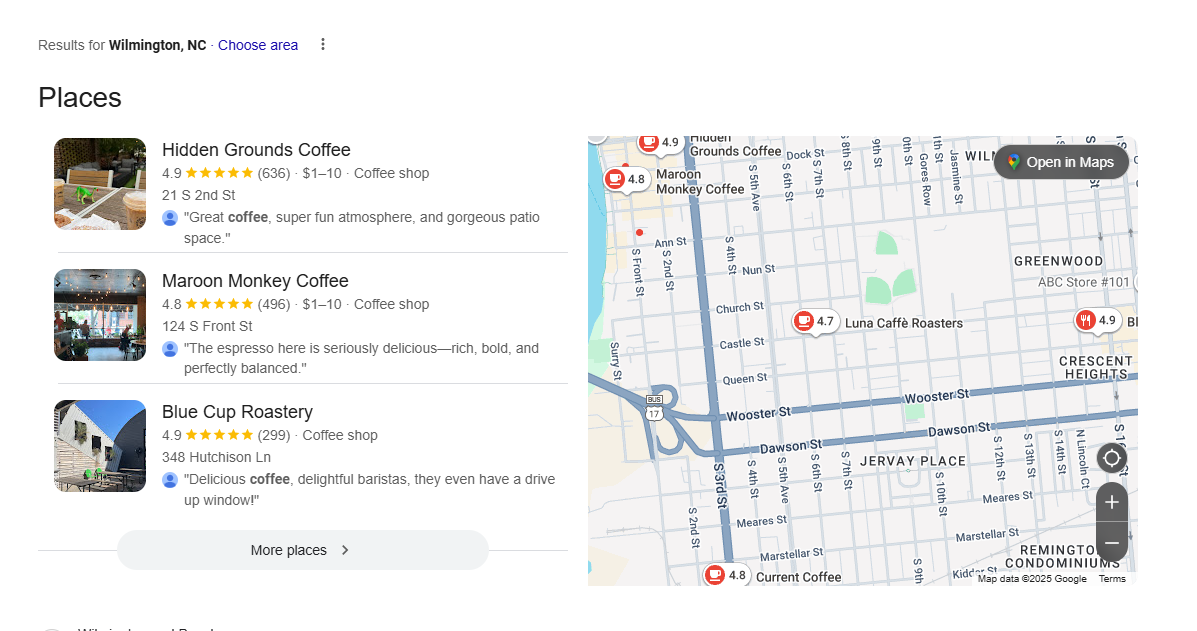
Let’s dig into the most frequent mistakes.
Mistake #1: Inconsistent NAP (Name, Address, Phone) Data
One of the simplest, yet most damaging errors is listing your business name, address or phone number differently across directories, your website and your Google Business Profile (GBP). When the NAP data doesn’t match, search engines struggle to verify your legitimacy.
How to Fix It:
- Perform a quick audit of all your business listings (Google Business Profile, Yelp, Facebook Business Page, local directories).
- Standardize how your business name is written (e.g., “True Blue Plumbing Services” vs. “True Blue Plumbing”).
- Ensure your address uses the same format (street abbreviation vs. spelled out) and phone number includes area code consistently.
- Lock in a consistent format and regularly monitor for changes.
Mistake #2: Ignoring or Under-Optimizing Your Google Business Profile
Your Google Business Profile is basically your storefront on the internet. If it’s outdated or half-filled, it’s like keeping the door locked when people are trying to come in to shop.
How to Fix It:
- Claim or verify your profile if you haven’t already. This is super important.
- Fill everything out: your name, address, phone number, hours, photos, services, and a quick, clear description of what you do.
- Pick the right categories and make sure your service areas are accurate.
- Post updates regularly: special offers, events, new services, anything happening in your business.
- Ask customers for reviews and make sure you reply to them (yes, even the weird and bad ones).
- Use the “Questions & Answers” section to clear up common questions and show people you’re active and helpful.
Mistake #3: Not Targeting Local Keywords or Ignoring Local Intent
If you’re only targeting broad terms, you’re competing with the entire internet and missing the people who are searching for solutions right in your backyard. Without location-based keywords, you lose out on high-intent buyers who are ready to connect with a nearby business.
How to Fix It:
- Research geographically relevant keywords using tools like Google Keyword Planner or SEMrush (“near me,” city names, neighborhoods, zip codes).
- Naturally incorporate those keywords into meta titles, descriptions, headers, and page content.
- Build dedicated landing pages for each service area you serve, with original, localized content.
- Track “near me” and Maps-related queries in Google Search Console and Google Business Profile Insights.
Mistake #4: Neglecting Mobile Optimization & Page Speed
Most local searches happen on mobile phones, and Google pays close attention to how well your site performs there. If your site doesn’t load quickly or isn’t optimized for mobile, Google takes it as a sign that your business shouldn’t rank as high.
How to Fix It:
- Run a mobile-friendly test and a page-speed check (PageSpeed Insights works great).
- Speed things up by compressing images, cutting down heavy scripts, and using browser caching.
- Make sure your site is fully responsive and that important info, like your phone number, is easy to tap.
- Keep key mobile actions front and center: “Call” buttons, map links, and service-area details should be effortless to find and use.
Mistake #5: Failing to Build Local Backlinks & Community Signals
Local SEO isn’t only about your website. It’s about your reputation in the community. If other local websites aren’t mentioning or linking to your business, Google sees less proof that you’re a trusted local authority.
How to Fix It:
- List your business on trusted local directories such as the Chamber of Commerce, local news, and community organizations.
- Collaborate with local influencers, sponsorships, charities, and events, and secure a link or press mention.
- Publish locally relevant content and promote it within your area to earn natural engagement.
- Regularly check and clean up inconsistent or duplicate business listings.
- If someone locally mentions you, ask them to tag or link your business.
Mistake #6: No Measurement or Tracking of Local Metrics
You can have all your local SEO pieces in place, but if you’re not measuring the right stuff, you’ll never really know what’s moving the needle. A lot of businesses focus only on website traffic, when things like calls, map clicks, direction requests, social media, and profile views matter just as much (sometimes even more) for local results.
How to Fix It:
- Make sure you’ve got Google Analytics and Google Search Console set up so you can see your local organic traffic, which pages people land on, and where they’re coming from geographically.
- Check your Google Business Profile Insights regularly. Keep an eye on searches, views, calls, direction requests; basically any action someone can take from your listing.
- Set clear goals for each channel (for example: “Increase profile calls by 30% in the next 90 days”) and track your progress consistently.
- And don’t forget call-tracking tools. They’re great for figuring out which phone leads actually came from local search.
BlueTone Media - How We Can Help
If you’re a local business or service provider in a competitive region, local SEO isn’t optional: it’s a key lead‐generation channel. But the difference between ranking and thriving often comes down to avoiding simple mistakes.
By ensuring your NAP is consistent, your Google Business Profile is optimized, you’re targeting local keywords, your mobile experience is strong, and you’re building local links, you’ll put yourself ahead of the businesses still “winging it.”
Need help auditing your local presence or building a custom local-SEO plan? Find out how the team at BlueTone Media can help!
